360° Engage
Visual Identity & User Experience
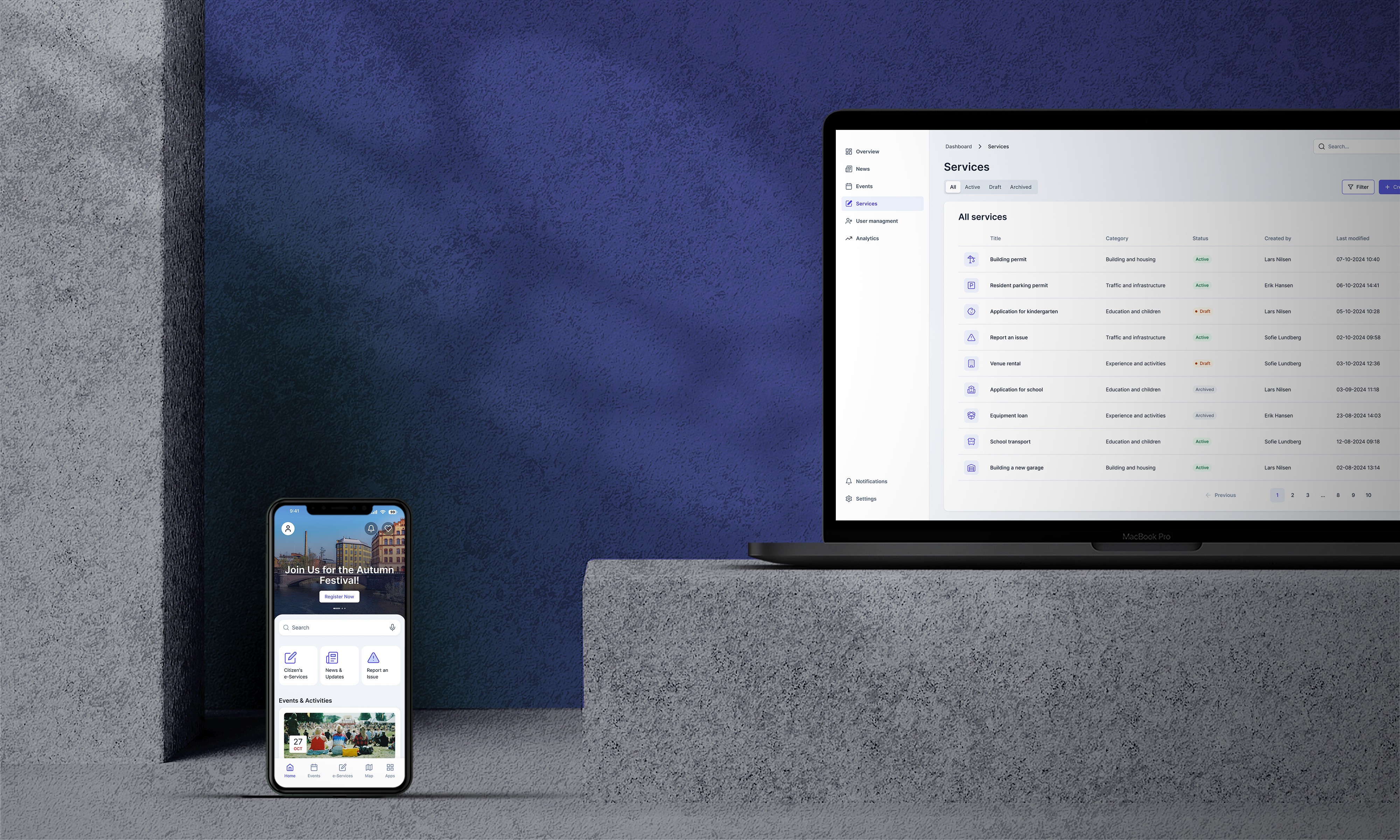
360° Engage is an innovative solution backed by Tietoevry Public 360°, designed to bridge the gap between citizens and municipalities by enabling seamless, streamlined communication. It offers a customizable citizen app that delivers real-time updates, effortless access to local services, and direct interaction with local government. With a focus on personalization and engagement, it intelligently tailors relevant services to users' needs.
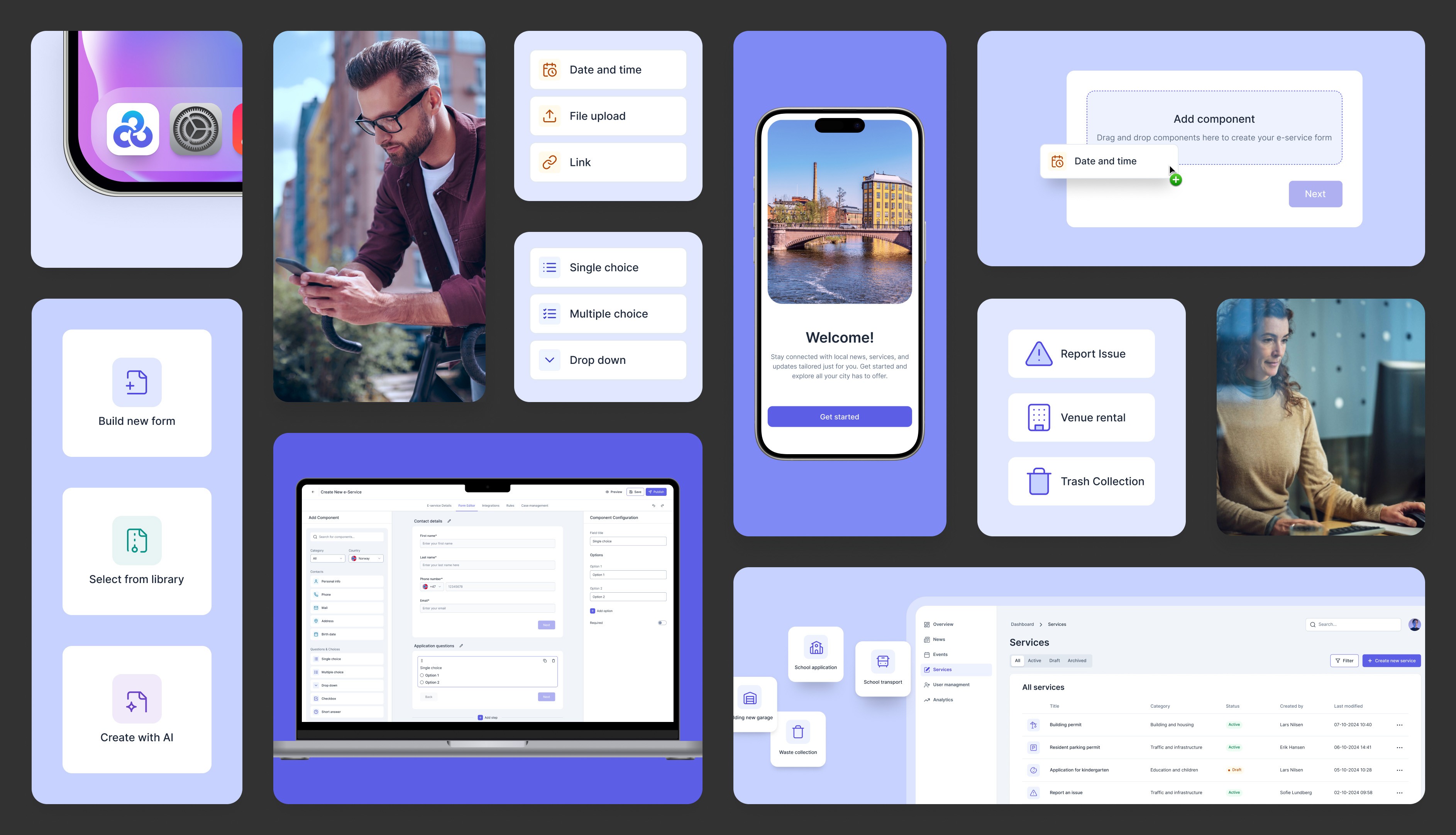
On the administrative side, the 360° Collect provides an intuitive interface for municipalities, while the e-Service Builder empowers them to create, deploy, and manage e-services without requiring extensive technical expertise. AI-assisted tools and a library of customizable components simplify digital service delivery, enabling municipalities to efficiently publish content, engage with citizens, and scale operations with minimal resources.
This project aims to unify service delivery and citizen engagement into a smart, connected platform that enhances accessibility, efficiency, and community participation.
Role
Research, sketching, wireframing, visual design, prototyping, testing.
Research Overview
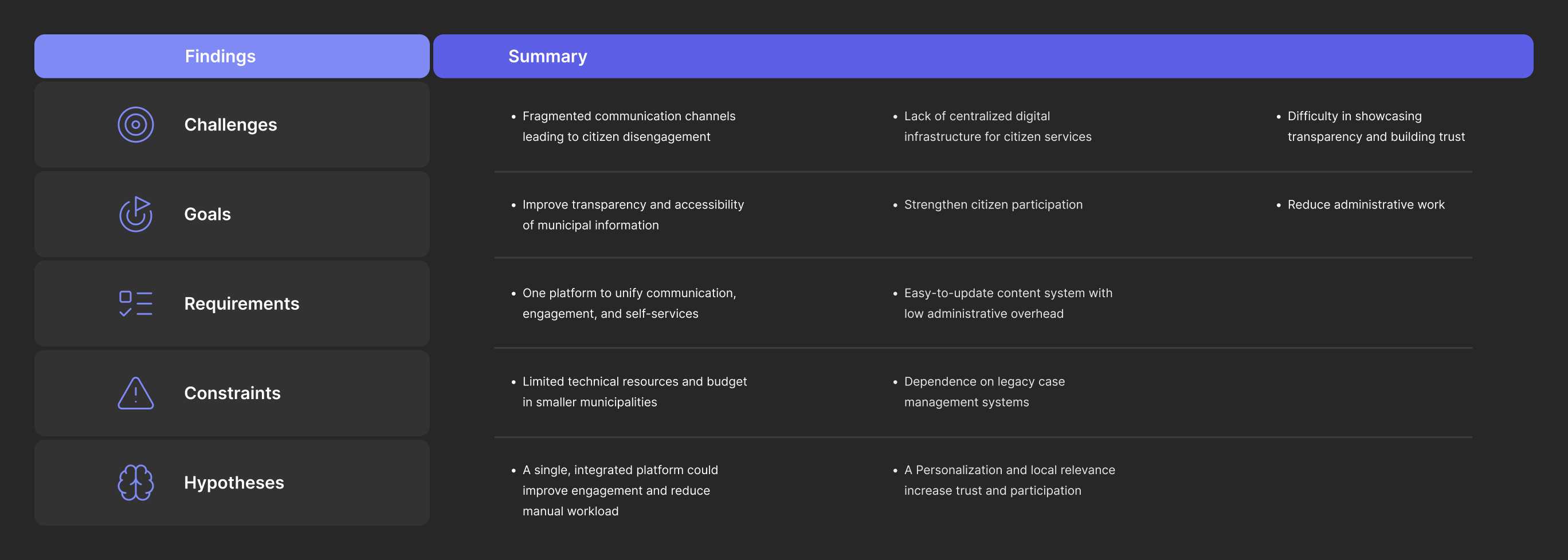
Before defining the concept, the research phase focused on understanding both sides of the municipal ecosystem — the needs of citizens and the operational challenges faced by municipal administrators.
By combining stakeholder discovery, competitive benchmarking, and user analysis, the goal was to identify opportunities for a unified solution that connects citizen engagement and municipal efficiency.
Stakeholder Discovery & Strategic Insights
The goal was to understand the municipality’s challenges, goals, and constraints in engaging citizens and delivering digital services efficiently. This involved participating in discovery sessions with stakeholders to uncover strategic and operational pain points, and reviewing service delivery workflows and documentation to identify friction points and opportunities for digital improvement.
Administrative User Research – Understanding Municipal Needs
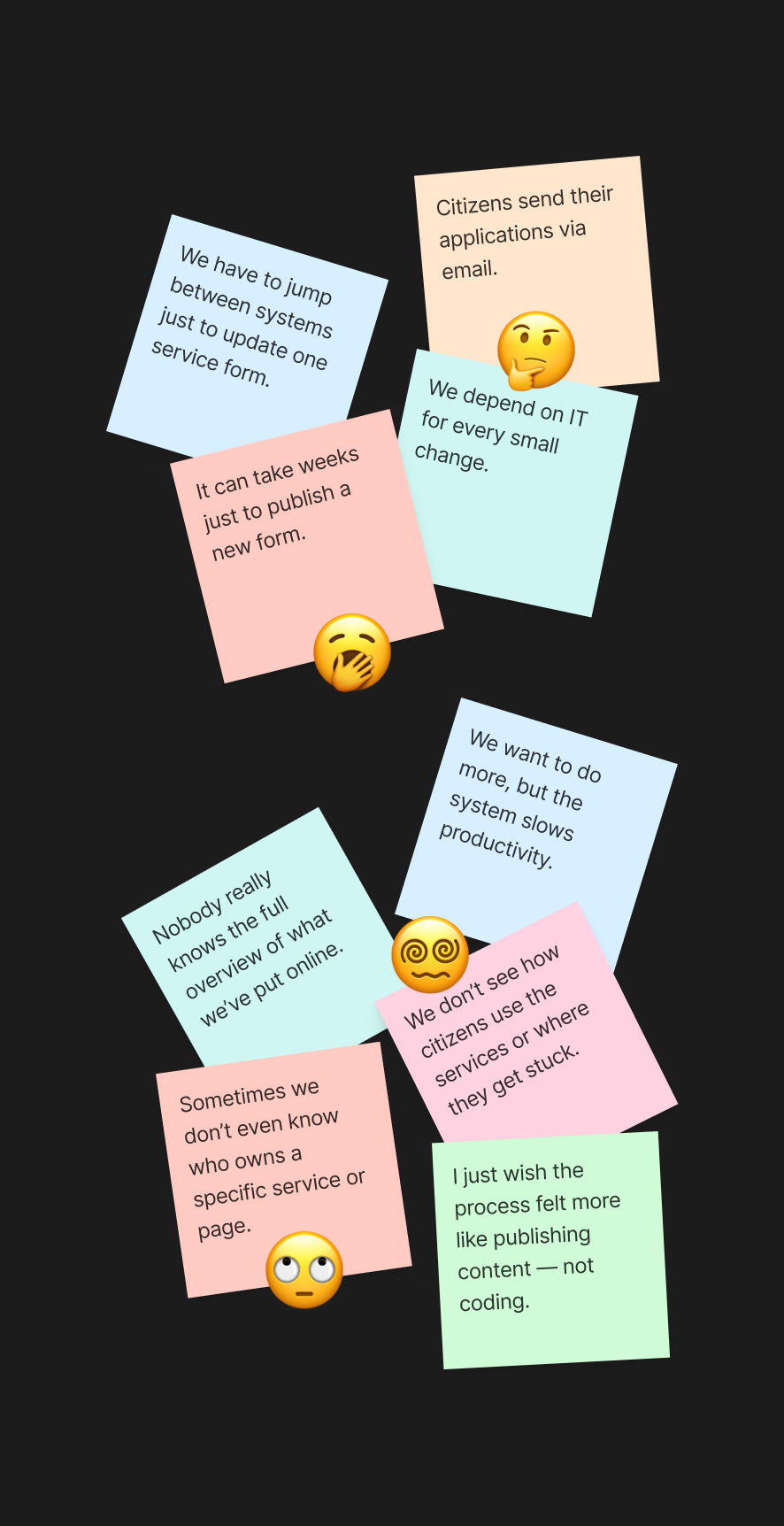
The goal was to understand how municipal employees create, manage, and maintain digital services, and to identify opportunities to make these processes more efficient and less reliant on technical expertise. This was achieved through exploratory interviews and workshops with municipal staff and digital coordinators, mapping workflows, uncovering pain points, and defining key areas for improvement in service delivery.
Key Learnings
- Fragmented Workflows: Employees use multiple disconnected systems for publishing and approvals, creating inefficiency and errors.
- Technical Dependency: Non-technical staff rely on IT for even minor updates, slowing response times and innovation.
- Limited Visibility: Lack of analytics prevents understanding how citizens use services or where they encounter issues.
- Poor Collaboration: Unclear ownership and siloed communication reduce consistency and speed.
Insight
Municipalities need a centralized, intuitive e-service builder that enables non-technical staff to manage services independently, fosters collaboration, and provides visibility into performance — improving efficiency, transparency, and scalability across departments.
Competitive Research – Understanding the Citizen App Landscape
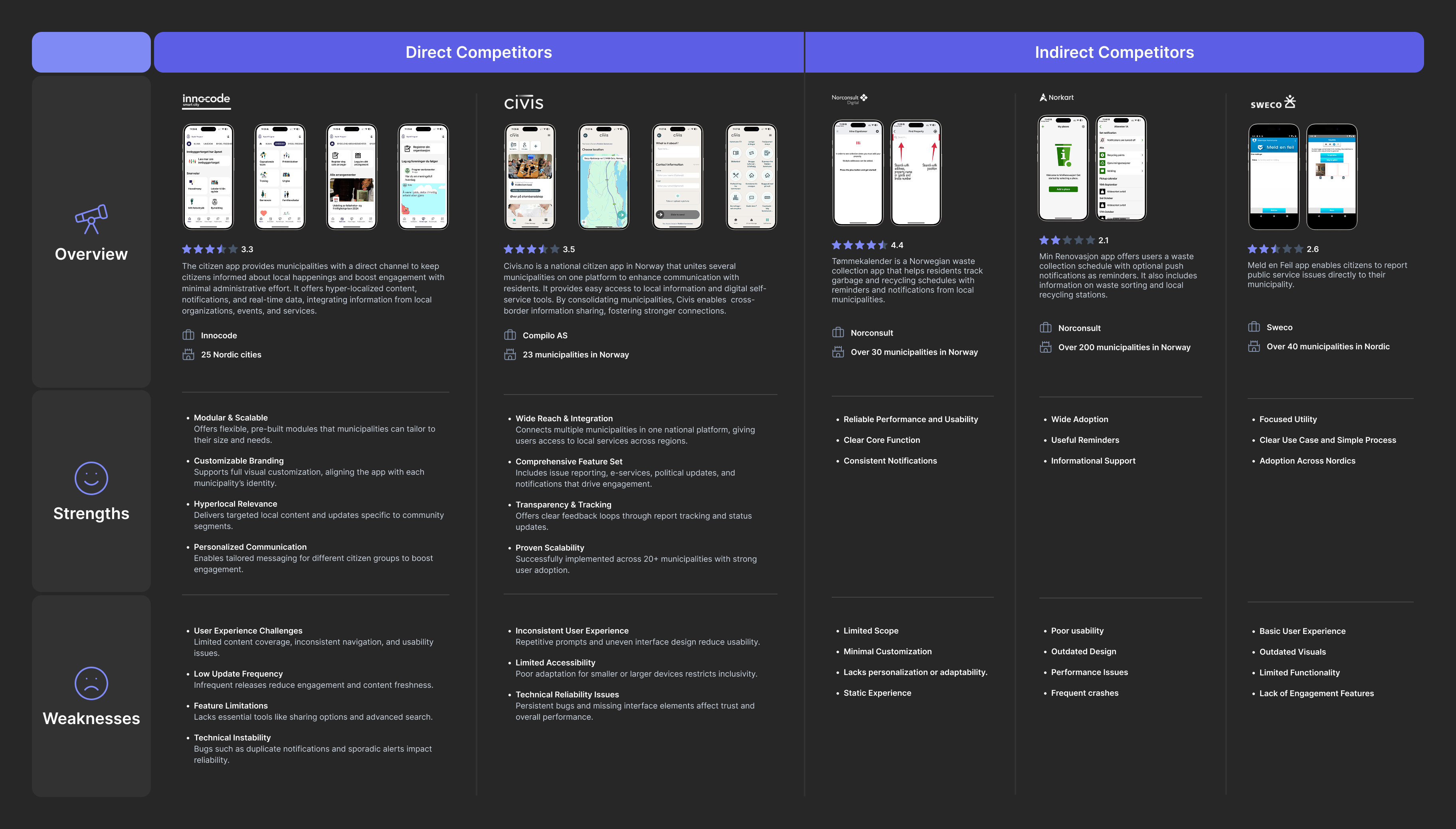
The goal was to map the Nordic market of citizen engagement apps, evaluate their strengths and weaknesses, and identify gaps to guide the concept direction. This involved analyzing over 40 municipal and citizen apps across Norway, Sweden, Denmark, and Finland, assessing usability, scalability, service integration, and citizen value, while user reviews and app ratings offered further insight into real user experiences and frustrations.
Bridging Citizen and Municipality Needs
Research uncovered shared challenges between citizens and municipalities — both facing fragmented systems, inefficiency, and limited transparency. These insights reveal where design can create the greatest impact for the 360° Engage and 360° Collect platforms. From this, five key opportunity areas emerged:
- Unify Communication and Services – Connect engagement and e-service tools into one seamless ecosystem.
- Empower Municipal Staff – Enable non-technical employees to create and manage services through a no-code, AI-assisted builder.
- Increase Transparency and Feedback – Build trust with clear updates and visible outcomes for citizen input.
- Personalize the Citizen Experience – Deliver hyperlocal content and tailored notifications to enhance relevance.
- Enable Scalable Implementation – Design a modular system adaptable to both large and small municipalities.
Personas Shaping the Municipal Ecosystem
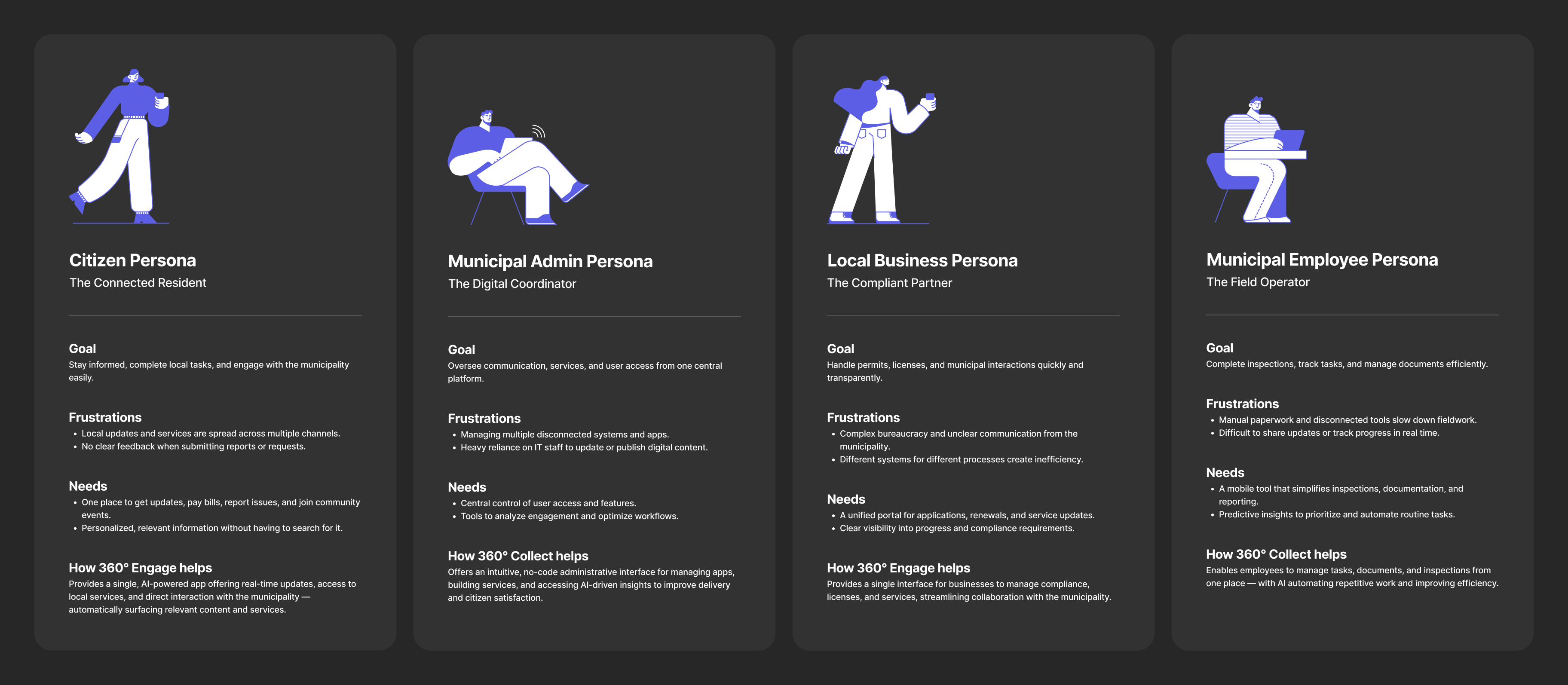
The personas represent the key groups within the municipal ecosystem — citizens, employees, businesses, and administrators, each with unique goals and challenges. Together, these personas illustrate the diverse needs the 360° platform must balance, connecting people, processes, and technology into one cohesive digital experience.
Wireframing & Early Validation
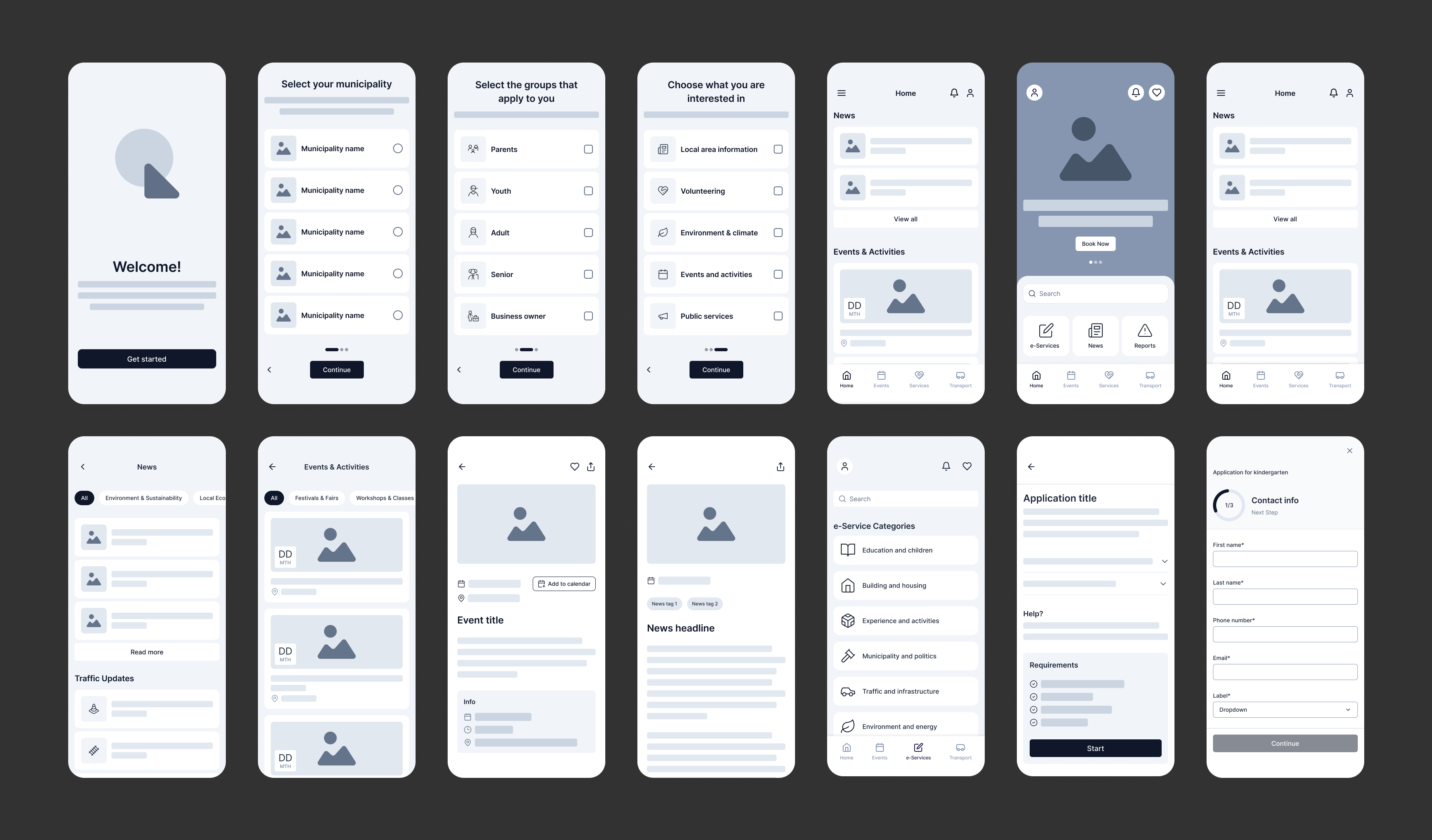
Low-fidelity wireframes were developed to visualize key user journeys, including citizen engagement flows and administrative service creation.
These prototypes were shared in internal usability walkthroughs and informal feedback sessions with stakeholders and a few municipal staff, helping validate navigation clarity, task efficiency, and content structure before moving into visual design.
Visual Identity & Design System
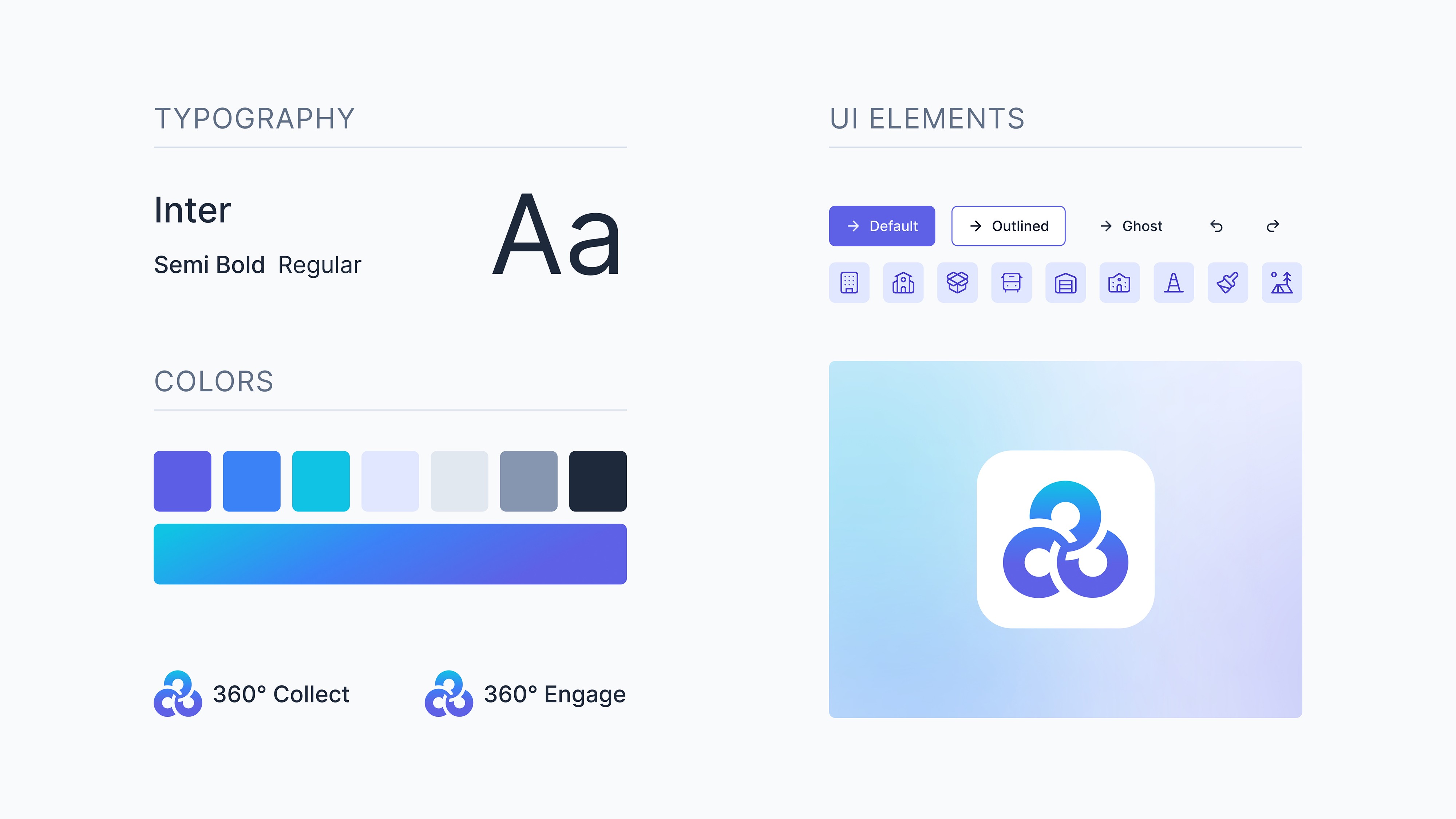
The visual identity was built to reflect trust, transparency, and accessibility — the core values identified in research. A clean, modular design system ensures consistency across both citizen and admin interfaces, while color, typography, and iconography promote clarity and inclusivity.
Final Design
The final design was shaped through multiple iterations, usability tests, and continuous collaboration with cross-functional teams and stakeholders. Insights from these sessions helped refine interaction patterns, streamline task flows, and ensure the experience aligned with both citizen and municipal needs while remaining flexible and scalable as new offerings and features are introduced over time.
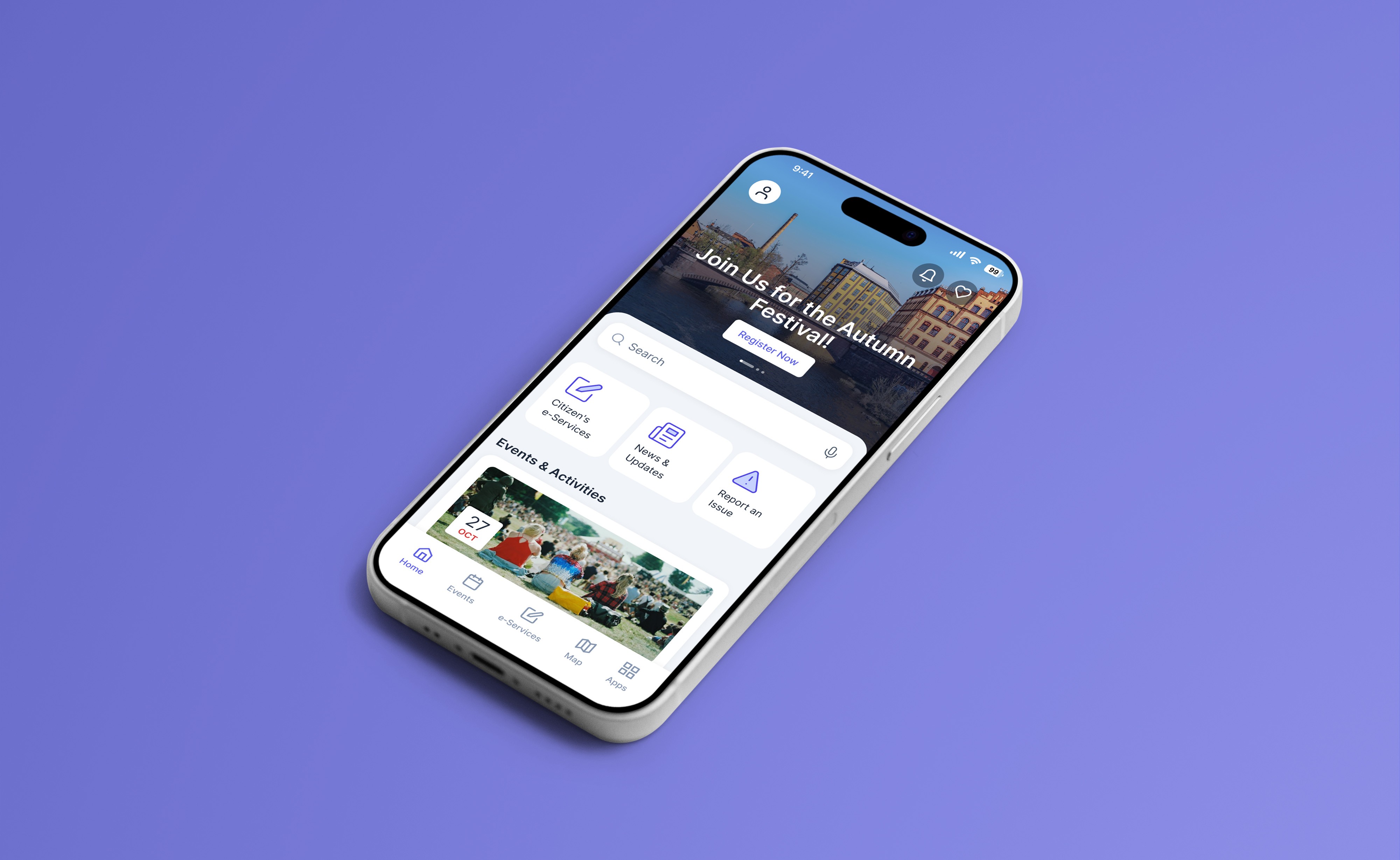
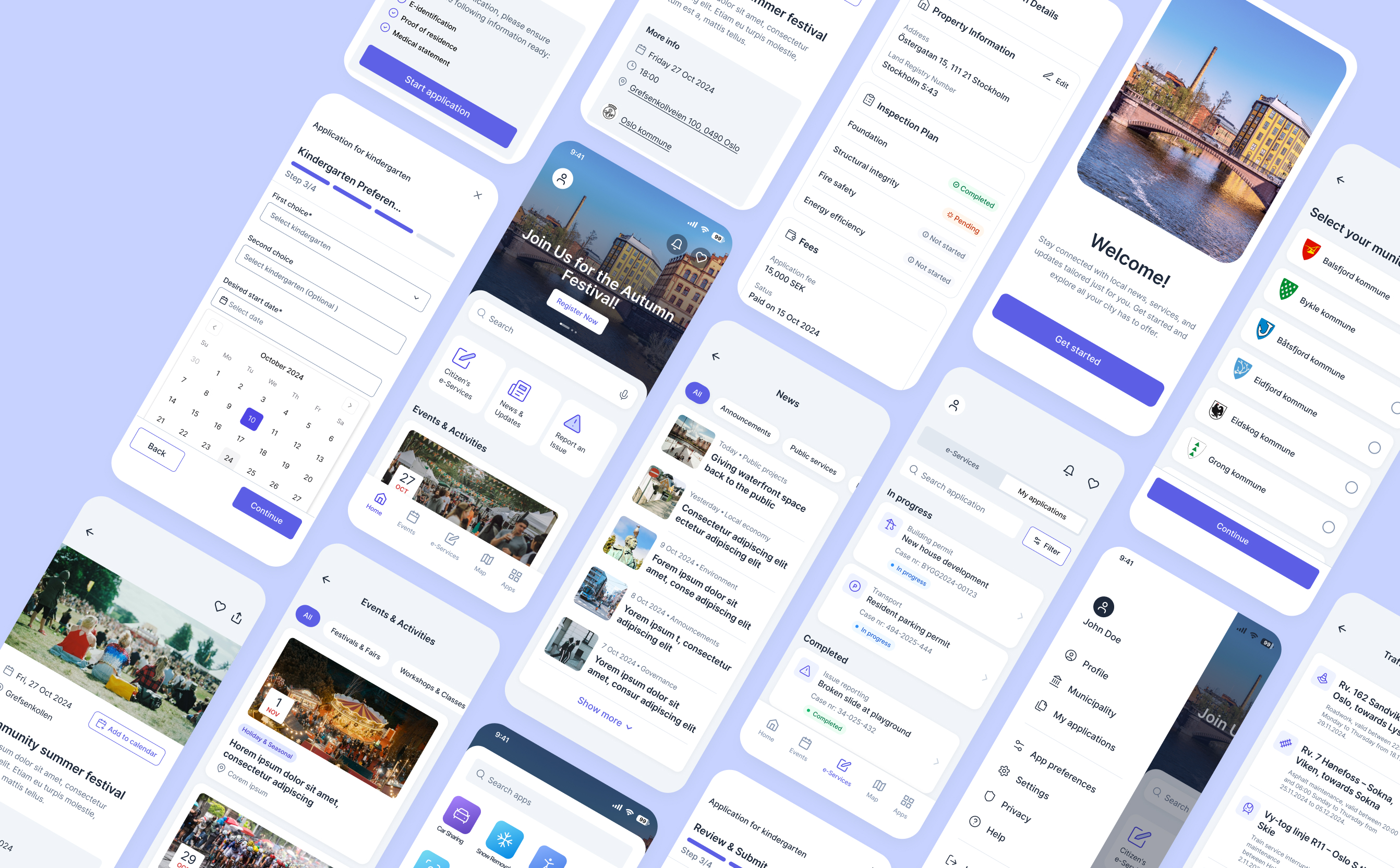
- 360° Engage — a personalized, user-friendly app for citizens, enabling access to local updates, events, and e-services in one place.
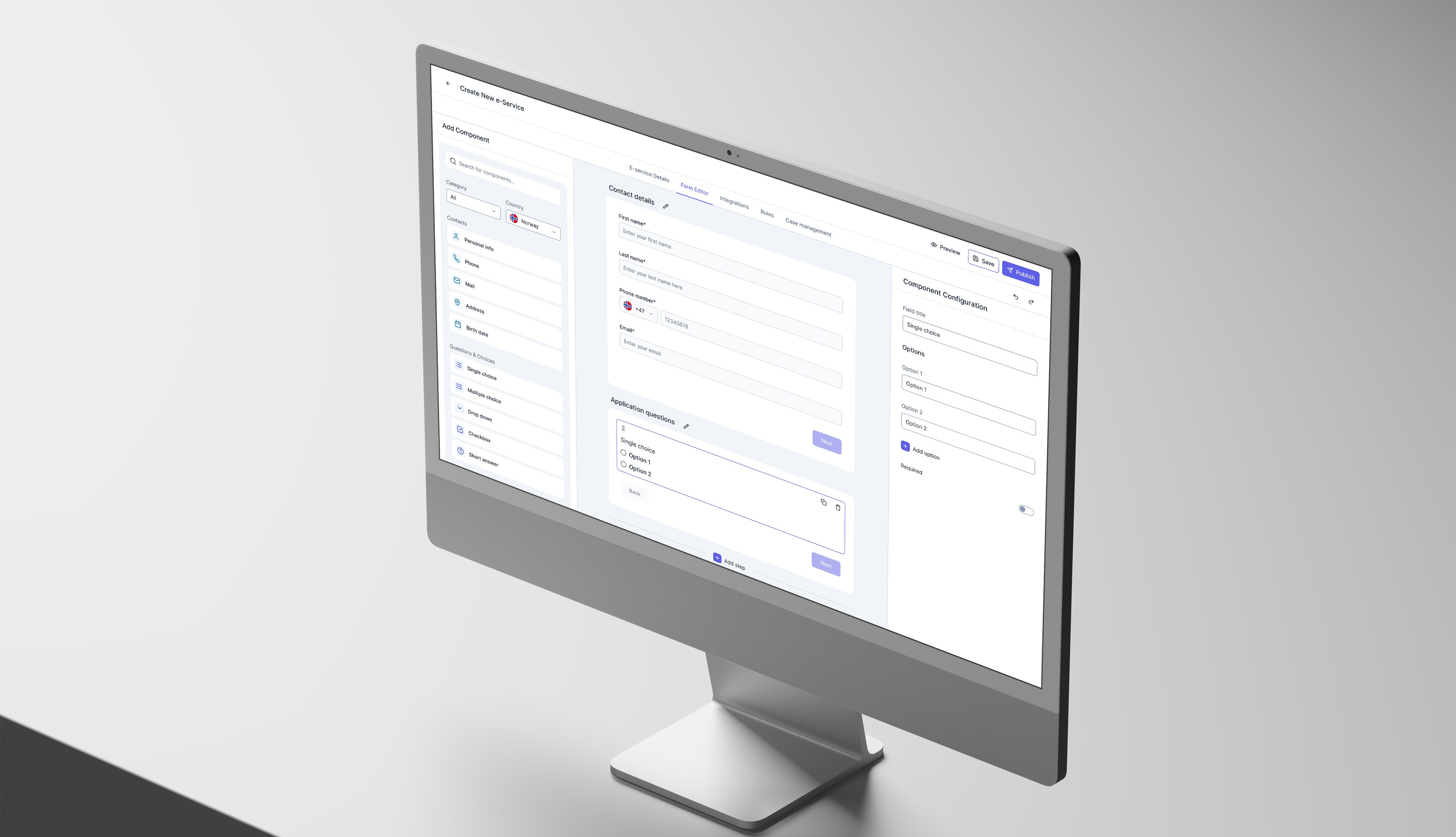
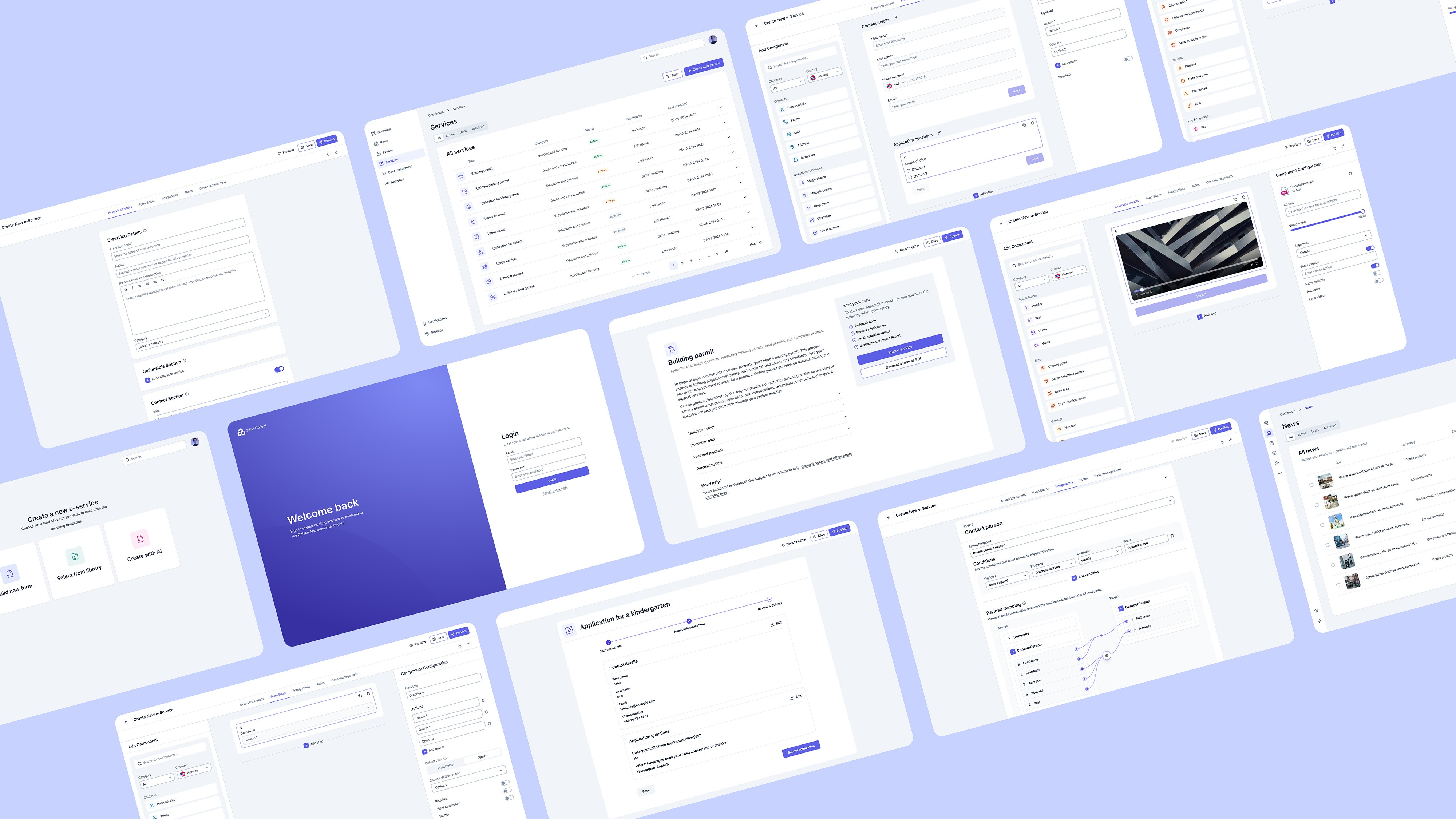
- 360° Collect — an administrative tool that simplifies e-service management with AI-assisted features, analytics, and content control.

Other Projects

Mimir Generative AI
Visual Design & User Interface
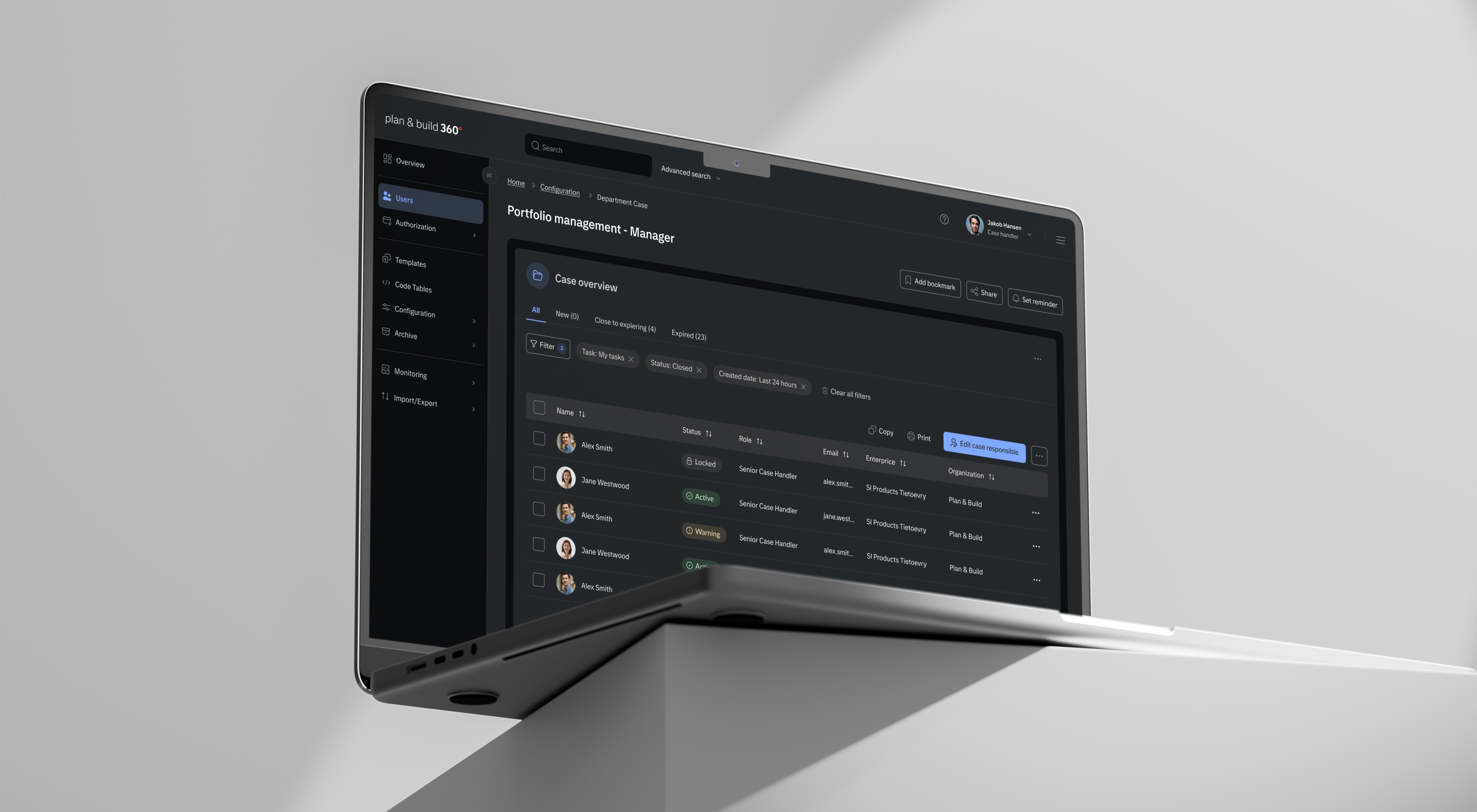
Public 360° Design System
User Experience & User Interface
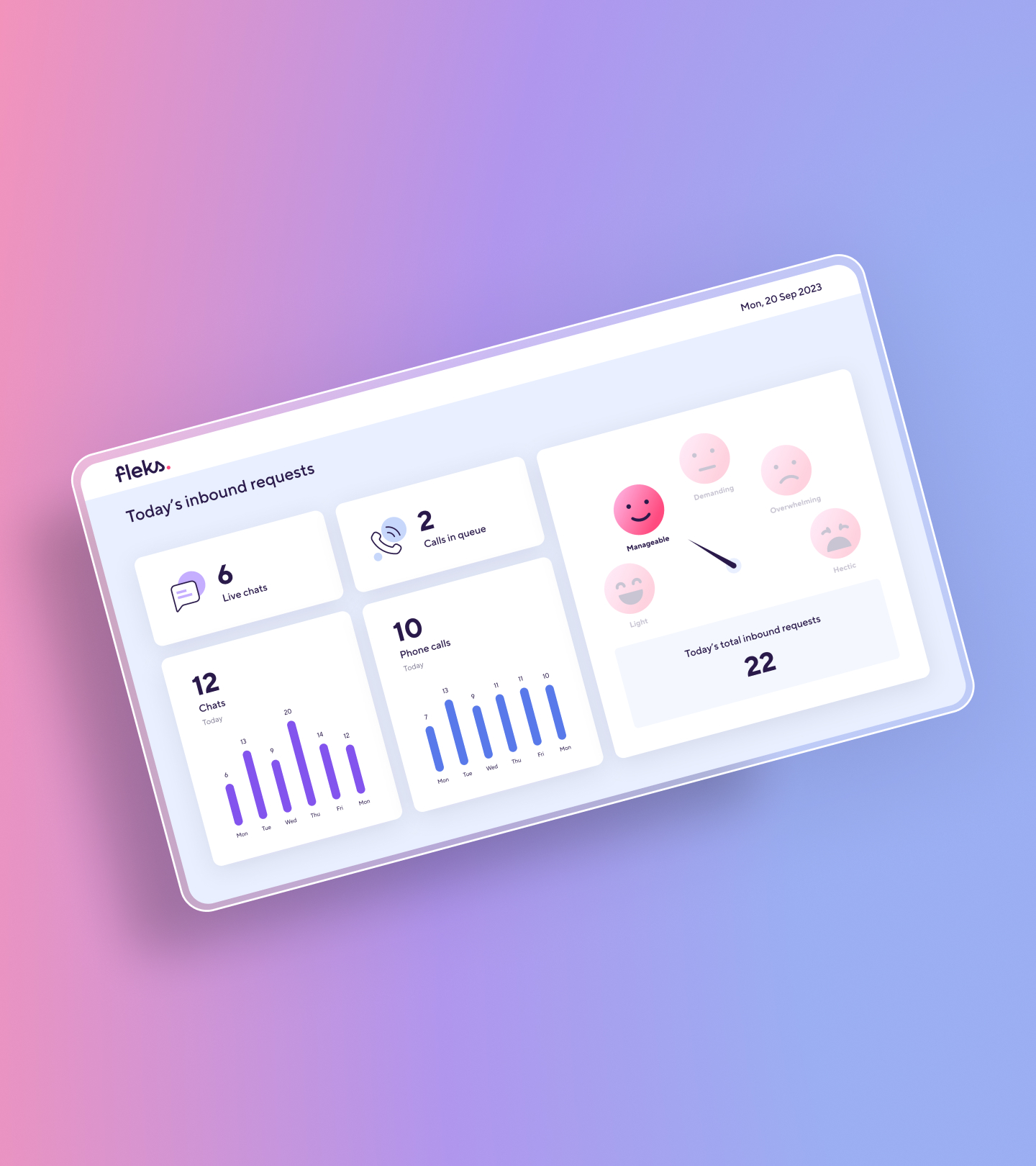
Fleks KPI Dashboards
User Experience & Visual Design

© Mariam Yagubi. 2025

360° Engage
Visual Identity & User Experience
360° Engage is an innovative solution backed by Tietoevry Public 360°, designed to bridge the gap between citizens and municipalities by enabling seamless, streamlined communication. It offers a customizable citizen app that delivers real-time updates, effortless access to local services, and direct interaction with local government. With a focus on personalization and engagement, it intelligently tailors relevant services to users' needs.
On the administrative side, the 360° Collect provides an intuitive interface for municipalities, while the e-Service Builder empowers them to create, deploy, and manage e-services without requiring extensive technical expertise. AI-assisted tools and a library of customizable components simplify digital service delivery, enabling municipalities to efficiently publish content, engage with citizens, and scale operations with minimal resources.
This project aims to unify service delivery and citizen engagement into a smart, connected platform that enhances accessibility, efficiency, and community participation.
Role
Research, sketching, wireframing, visual design, prototyping, testing.
Research Overview
Before defining the concept, the research phase focused on understanding both sides of the municipal ecosystem — the needs of citizens and the operational challenges faced by municipal administrators.
By combining stakeholder discovery, competitive benchmarking, and user analysis, the goal was to identify opportunities for a unified solution that connects citizen engagement and municipal efficiency.
Stakeholder Discovery & Strategic Insights
The goal was to understand the municipality’s challenges, goals, and constraints in engaging citizens and delivering digital services efficiently. This involved participating in discovery sessions with stakeholders to uncover strategic and operational pain points, and reviewing service delivery workflows and documentation to identify friction points and opportunities for digital improvement.
Administrative User Research – Understanding Municipal Needs
The goal was to understand how municipal employees create, manage, and maintain digital services, and to identify opportunities to make these processes more efficient and less reliant on technical expertise. This was achieved through exploratory interviews and workshops with municipal staff and digital coordinators, mapping workflows, uncovering pain points, and defining key areas for improvement in service delivery.
Key Learnings
- Fragmented Workflows: Employees use multiple disconnected systems for publishing and approvals, creating inefficiency and errors.
- Technical Dependency: Non-technical staff rely on IT for even minor updates, slowing response times and innovation.
- Limited Visibility: Lack of analytics prevents understanding how citizens use services or where they encounter issues.
- Poor Collaboration: Unclear ownership and siloed communication reduce consistency and speed.
Insight
Municipalities need a centralized, intuitive e-service builder that enables non-technical staff to manage services independently, fosters collaboration, and provides visibility into performance — improving efficiency, transparency, and scalability across departments.
Competitive Research – Understanding the Citizen App Landscape
The goal was to map the Nordic market of citizen engagement apps, evaluate their strengths and weaknesses, and identify gaps to guide the concept direction. This involved analyzing over 40 municipal and citizen apps across Norway, Sweden, Denmark, and Finland, assessing usability, scalability, service integration, and citizen value, while user reviews and app ratings offered further insight into real user experiences and frustrations.
Bridging Citizen and Municipality Needs
Research uncovered shared challenges between citizens and municipalities — both facing fragmented systems, inefficiency, and limited transparency. These insights reveal where design can create the greatest impact for the 360° Engage and 360° Collect platforms. From this, five key opportunity areas emerged:
- Unify Communication and Services – Connect engagement and e-service tools into one seamless ecosystem.
- Empower Municipal Staff – Enable non-technical employees to create and manage services through a no-code, AI-assisted builder.
- Increase Transparency and Feedback – Build trust with clear updates and visible outcomes for citizen input.
- Personalize the Citizen Experience – Deliver hyperlocal content and tailored notifications to enhance relevance.
- Enable Scalable Implementation – Design a modular system adaptable to both large and small municipalities.
Personas Shaping the Municipal Ecosystem
The personas represent the key groups within the municipal ecosystem — citizens, employees, businesses, and administrators, each with unique goals and challenges. Together, these personas illustrate the diverse needs the 360° platform must balance, connecting people, processes, and technology into one cohesive digital experience.
Wireframing & Early Validation
Low-fidelity wireframes were developed to visualize key user journeys, including citizen engagement flows and administrative service creation.
These prototypes were shared in internal usability walkthroughs and informal feedback sessions with stakeholders and a few municipal staff, helping validate navigation clarity, task efficiency, and content structure before moving into visual design.
Visual Identity & Design System
The visual identity was built to reflect trust, transparency, and accessibility — the core values identified in research. A clean, modular design system ensures consistency across both citizen and admin interfaces, while color, typography, and iconography promote clarity and inclusivity.
Final Design
The final design was shaped through multiple iterations, usability tests, and continuous collaboration with cross-functional teams and stakeholders. Insights from these sessions helped refine interaction patterns, streamline task flows, and ensure the experience aligned with both citizen and municipal needs while remaining flexible and scalable as new offerings and features are introduced over time.
- 360° Engage — a personalized, user-friendly app for citizens, enabling access to local updates, events, and e-services in one place.
- 360° Collect — an administrative tool that simplifies e-service management with AI-assisted features, analytics, and content control.

Other Projects
Mimir Generative AI
Visual Design & User Interface
Public 360° Design System
User Experience & User Interface
Fleks KPI Dashboards
User Experience & Visual Design

© Mariam Yagubi. 2025
360° Engage
User Experience & Visual Identity
360° Engage is an innovative solution backed by Tietoevry Public 360°, designed to bridge the gap between citizens and municipalities by enabling seamless, streamlined communication. It offers a customizable citizen app that delivers real-time updates, effortless access to local services, and direct interaction with local government. With a focus on personalization and engagement, it intelligently tailors relevant services to users' needs.
On the administrative side, the 360° Collect provides an intuitive interface for municipalities, while the e-Service Builder empowers them to create, deploy, and manage e-services without requiring extensive technical expertise. AI-assisted tools and a library of customizable components simplify digital service delivery, enabling municipalities to efficiently publish content, engage with citizens, and scale operations with minimal resources.
This project aims to unify service delivery and citizen engagement into a smart, connected platform that enhances accessibility, efficiency, and community participation.
Role
Research, sketching, wireframing, visual design, prototyping, testing.
Research Overview
Before defining the concept, the research phase focused on understanding both sides of the municipal ecosystem — the needs of citizens and the operational challenges faced by municipal administrators.
By combining stakeholder discovery, competitive benchmarking, and user analysis, the goal was to identify opportunities for a unified solution that connects citizen engagement and municipal efficiency.
Stakeholder Discovery & Strategic Insights
The goal was to understand the municipality’s challenges, goals, and constraints in engaging citizens and delivering digital services efficiently. This involved participating in discovery sessions with stakeholders to uncover strategic and operational pain points, and reviewing service delivery workflows and documentation to identify friction points and opportunities for digital improvement.
Administrative User Research – Understanding Municipal Needs
The goal was to understand how municipal employees create, manage, and maintain digital services, and to identify opportunities to make these processes more efficient and less reliant on technical expertise. This was achieved through exploratory interviews and workshops with municipal staff and digital coordinators, mapping workflows, uncovering pain points, and defining key areas for improvement in service delivery.
Key Learnings
- Fragmented Workflows: Employees use multiple disconnected systems for publishing and approvals, creating inefficiency and errors.
- Technical Dependency: Non-technical staff rely on IT for even minor updates, slowing response times and innovation.
- Limited Visibility: Lack of analytics prevents understanding how citizens use services or where they encounter issues.
- Poor Collaboration: Unclear ownership and siloed communication reduce consistency and speed.
Insight
Municipalities need a centralized, intuitive e-service builder that enables non-technical staff to manage services independently, fosters collaboration, and provides visibility into performance — improving efficiency, transparency, and scalability across departments.
Competitive Research – Understanding the Citizen App Landscape
The goal was to map the Nordic market of citizen engagement apps, evaluate their strengths and weaknesses, and identify gaps to guide the concept direction. This involved analyzing over 40 municipal and citizen apps across Norway, Sweden, Denmark, and Finland, assessing usability, scalability, service integration, and citizen value, while user reviews and app ratings offered further insight into real user experiences and frustrations.
Bridging Citizen and Municipality Needs
Research uncovered shared challenges between citizens and municipalities — both facing fragmented systems, inefficiency, and limited transparency. These insights reveal where design can create the greatest impact for the 360° Engage and 360° Collect platforms. From this, five key opportunity areas emerged:
- Unify Communication and Services – Connect engagement and e-service tools into one seamless ecosystem.
- Empower Municipal Staff – Enable non-technical employees to create and manage services through a no-code, AI-assisted builder.
- Increase Transparency and Feedback – Build trust with clear updates and visible outcomes for citizen input.
- Personalize the Citizen Experience – Deliver hyperlocal content and tailored notifications to enhance relevance.
- Enable Scalable Implementation – Design a modular system adaptable to both large and small municipalities.
Personas Shaping the Municipal Ecosystem
The personas represent the key groups within the municipal ecosystem — citizens, employees, businesses, and administrators, each with unique goals and challenges. Together, these personas illustrate the diverse needs the 360° platform must balance, connecting people, processes, and technology into one cohesive digital experience.
Wireframing & Early Validation
Low-fidelity wireframes were developed to visualize key user journeys, including citizen engagement flows and administrative service creation.
These prototypes were shared in internal usability walkthroughs and informal feedback sessions with stakeholders and a few municipal staff, helping validate navigation clarity, task efficiency, and content structure before moving into visual design.
Visual Identity & Design System
The visual identity was built to reflect trust, transparency, and accessibility — the core values identified in research. A clean, modular design system ensures consistency across both citizen and admin interfaces, while color, typography, and iconography promote clarity and inclusivity.
Final Design
The final design was shaped through multiple iterations, usability tests, and continuous collaboration with cross-functional teams and stakeholders. Insights from these sessions helped refine interaction patterns, streamline task flows, and ensure the experience aligned with both citizen and municipal needs while remaining flexible and scalable as new offerings and features are introduced over time.
- 360° Engage — a personalized, user-friendly app for citizens, enabling access to local updates, events, and e-services in one place.
- 360° Collect — an administrative tool that simplifies e-service management with AI-assisted features, analytics, and content control.

Other Projects
Mimir Generative AI
Visual Design & User Interface
Public 360° Design System
User Experience & User Interface
Fleks KPI Dashboards
User Experience & Visual Design

© Mariam Yagubi. 2025
